This article provides a simple overview of the MQTT protocol, how it works, and why it is commonly used in Internet of Things applications.
- MQTT was developed in 1999 by IBM.
- MQTT provides a lightweight way for devices to exchange messages over low-bandwidth or unreliable networks.
- MQTT is widely used in IoT systems because it supports efficient data collection and remote device control.
What is MQTT
MQTT stands for Message Queuing Telemetry Transport. It is a lightweight communication protocol based on the publish/subscribe model.
Instead of sending messages directly from one device to another, MQTT uses a central broker. Devices publish messages to topics, and other devices subscribe to those topics to receive the messages.
How MQTT Works
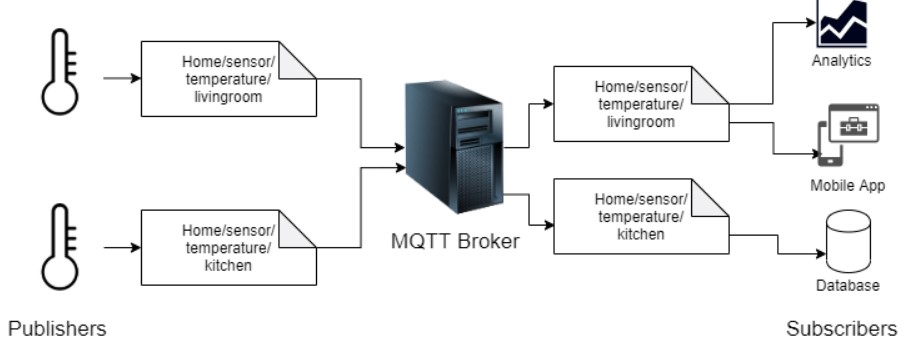
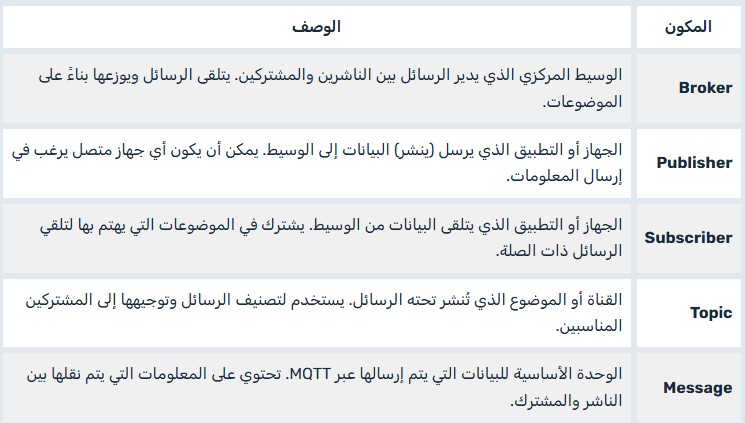
MQTT works using a broker and multiple clients. The broker is the central point that receives messages from publishers and forwards them to subscribers based on the topic name.
A publisher sends data to a specific topic. A subscriber receives messages only from the topics it subscribed to.
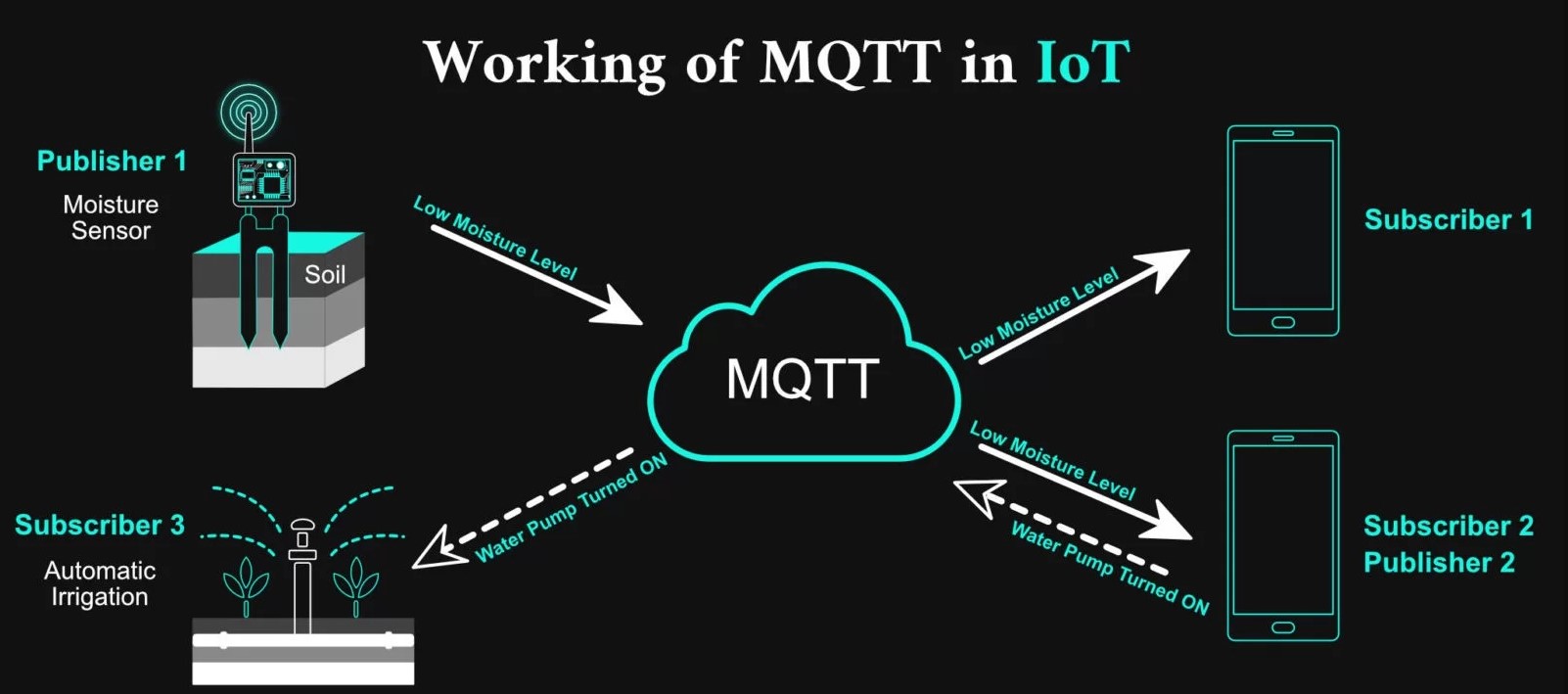
MQTT Example in IoT
In this example, a soil moisture sensor acts as a publisher. When it detects a low moisture level, it sends a message to the MQTT broker.
The broker forwards the message to subscribed clients such as a mobile app, monitoring dashboard, or an automatic irrigation system. A controller can then send a command to turn on the water pump.
Advantages of MQTT
- Lightweight: MQTT uses low bandwidth, making it suitable for devices with limited resources.
- Quality of Service: MQTT supports different QoS levels to control message delivery reliability.
- Message Retention: The broker can keep the last message for a topic so new subscribers can receive the latest state.
- Last Will and Testament: If a device disconnects unexpectedly, the broker can publish a predefined message on its behalf.
- Efficient network usage: MQTT reduces network overhead compared with heavier request-response protocols.
MQTT System Components
Platform Used for MQTT Practice
One platform that can be used to practice MQTT in IoT is Microsoft Azure IoT Hub. It provides support for MQTT, real-time message processing, and integration with other Azure services.
Security in MQTT
Security is one of the most important challenges in IoT systems, especially when using communication protocols such as MQTT.
- TLS/SSL: Used to encrypt communication between clients and the broker.
- Authentication: MQTT can require a username and password before allowing clients to publish or subscribe.
- Authorization: Administrators can control which clients are allowed to access specific topics.
- Encryption: In addition to encrypted transport, message payloads can also be encrypted for stronger protection.
MQTT Use Cases
- Home automation: MQTT can be used to control lights, thermostats, sensors, and other smart home devices.
- Industrial automation: MQTT can connect machines, monitor processes, and improve operational efficiency.
- Healthcare: MQTT can support remote patient monitoring by sending sensor readings from medical devices.
Frequently Asked Questions
What is MQTT
MQTT is an open messaging protocol that uses the publish/subscribe model.
How is MQTT different from HTTP
MQTT is designed for lightweight communication and low-bandwidth environments, while HTTP is commonly used for standard web request-response communication.
What is Quality of Service in MQTT
MQTT provides three QoS levels:
- QoS 0: The message is sent with best effort and no confirmation.
- QoS 1: The message is delivered at least once.
- QoS 2: The message is delivered exactly once without duplication.
Summary
MQTT is one of the most useful communication protocols for IoT systems because it is lightweight, efficient, reliable, and well-suited for devices with limited network or hardware resources.