AMEN
Smart Inspection Robot
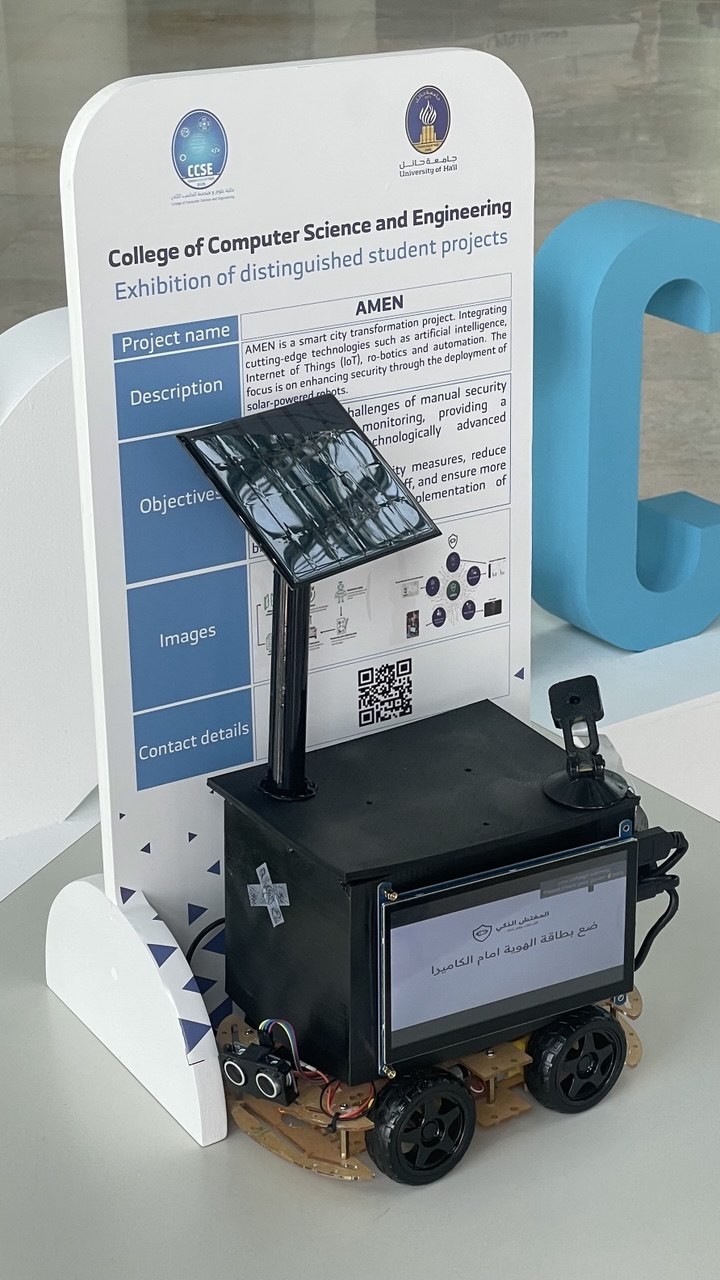
AMEN prototype overview and system demonstration.
AMEN is a smart inspection robot concept designed for security checkpoints. The system combines robotics, IoT, automation, computer vision, and data analytics to support vehicle inspection procedures, reduce manual effort, and improve the consistency of driver and vehicle verification.
Problem
Security checkpoints often depend on manual document verification and violation recording. Officers may need to work for long periods while checking driver identity, driving licenses, vehicle registration, insurance status, and possible vehicle restrictions. This process can consume time and effort, and it may lead to delays or inconsistent enforcement during busy periods.
- Manual inspection can be time-consuming during busy checkpoint operations.
- Officers need to verify multiple driver and vehicle documents.
- Repeated manual checks may reduce operational consistency.
- Checkpoint teams may be exposed to vehicle-side risks during inspection.
Solution
AMEN proposes a smart inspection robot that moves through a dedicated checkpoint path to verify driver and vehicle information. The robot is designed to scan identity information, check official documents, inspect vehicle-related data, and communicate with a smart gate that allows vehicles to pass after completing the inspection process.
- Automated driver and vehicle verification workflow.
- Robot movement through a dedicated checkpoint path.
- Smart gate integration for controlled vehicle passage.
- Dashboard-based monitoring and data collection.

How It Works
When a vehicle arrives at the checkpoint, AMEN begins by verifying the driver identity and checking the validity of the driving license. The robot then moves through its assigned path to inspect vehicle information such as registration, plate matching, insurance status, and existing restrictions. If no issue is detected, the gate opens and the vehicle is allowed to pass. If a violation is detected, the system records it and forwards it to the relevant platform. If the vehicle requires further action, AMEN sends an alert to the checkpoint control center.
- Verify driver identity and driving license validity.
- Check vehicle registration and plate information.
- Review insurance status and possible restrictions.
- Open the gate when the inspection is completed successfully.
- Record violations and notify the checkpoint control center when needed.
System Architecture
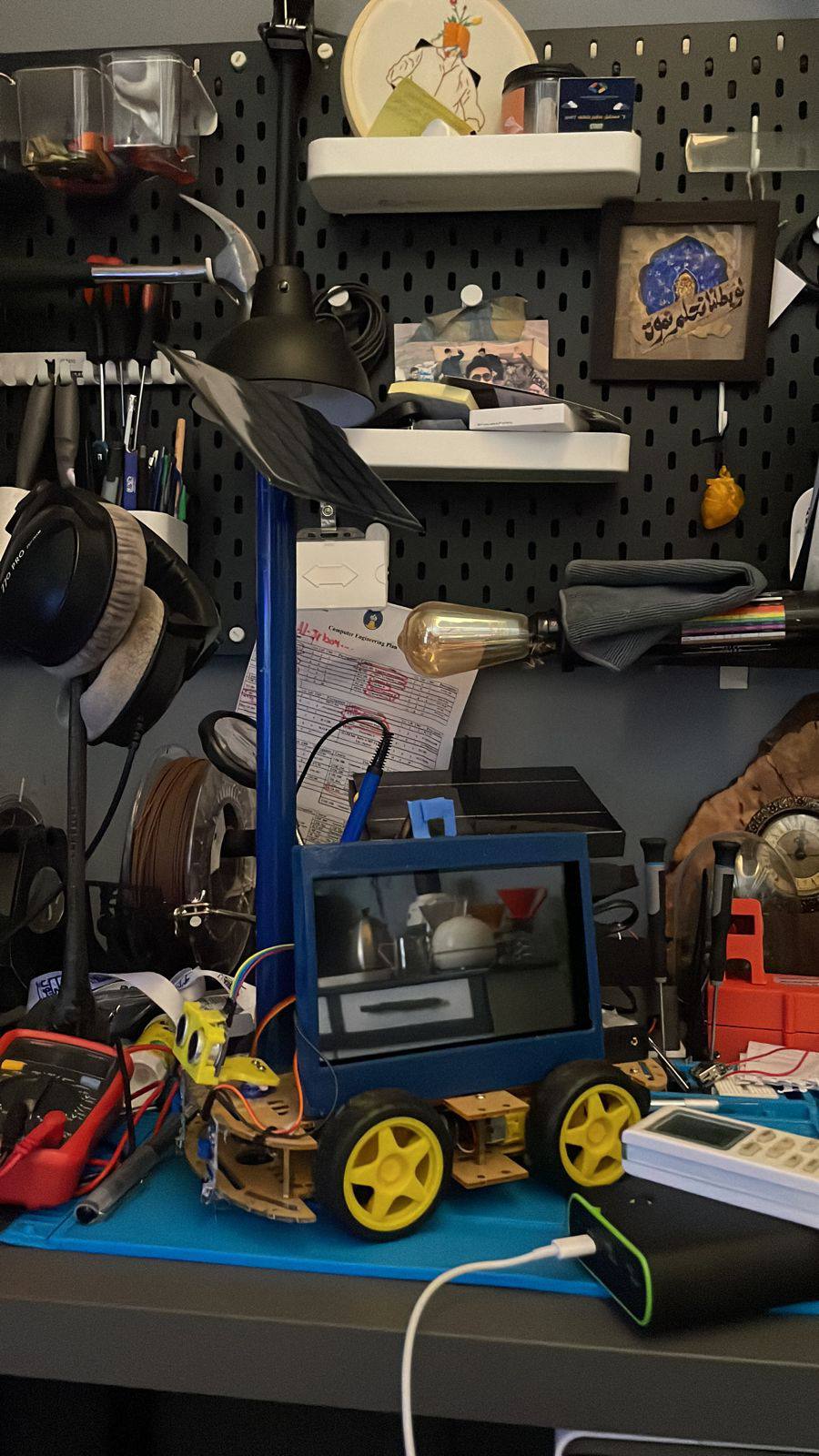
The system combines robotics, IoT, computer vision, data analytics, and automation. The prototype uses a robot platform, camera, ultrasonic sensing, servo control, Raspberry Pi, Arduino, a touch screen interface, and battery-powered operation. The software side includes Python, OpenCV, OCR processing, data visualization, and dashboard-oriented monitoring.
- Hardware: ultrasonic sensor, servo motor, Arduino UNO, Raspberry Pi, camera, touch screen, and lithium batteries.
- Software: Python, OpenCV, OCR processing, and data visualization.
- AI layer: computer vision for identity and document-related inspection.
- IoT layer: connected inspection workflow and dashboard monitoring.
Prototype Development
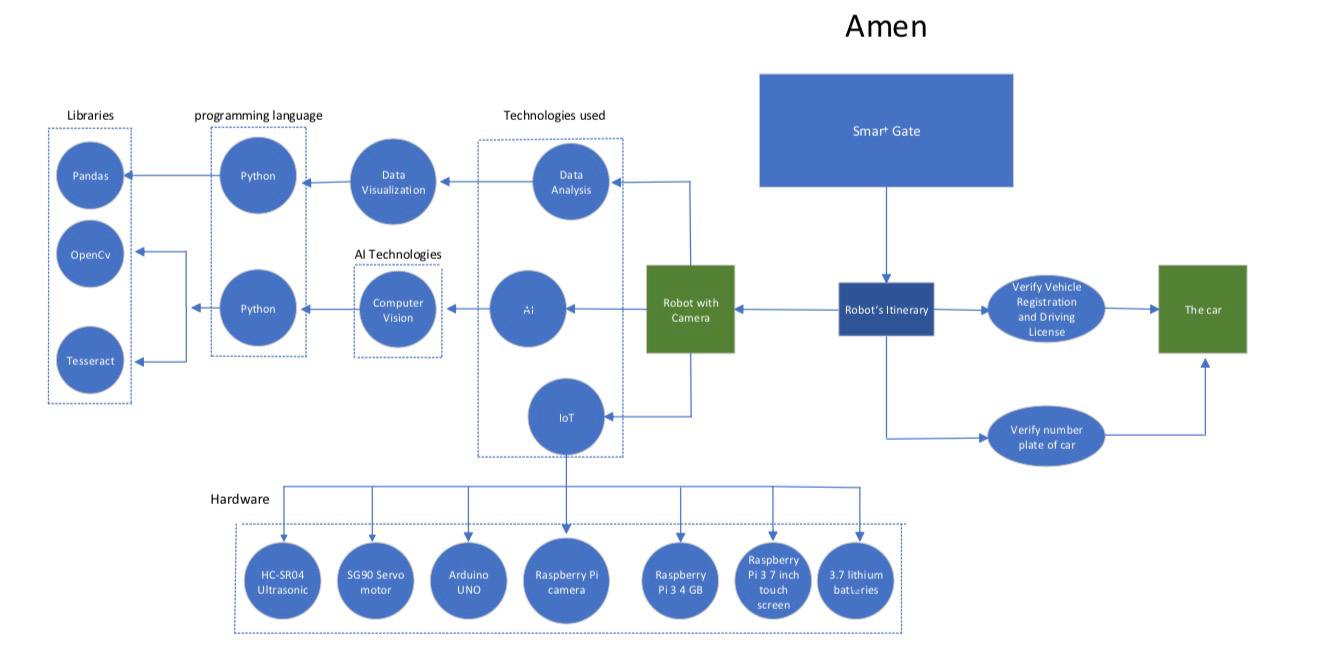
The AMEN prototype was developed as a physical proof of concept using a mobile robot platform with a mounted display, camera, sensor modules, and a solar-panel-inspired power concept. The design demonstrates how the robot can support checkpoint inspection scenarios and communicate inspection status to the user.
- Mobile robot platform with inspection-facing display.
- Mounted camera for scanning and verification scenarios.
- Ultrasonic sensor for distance and obstacle awareness.
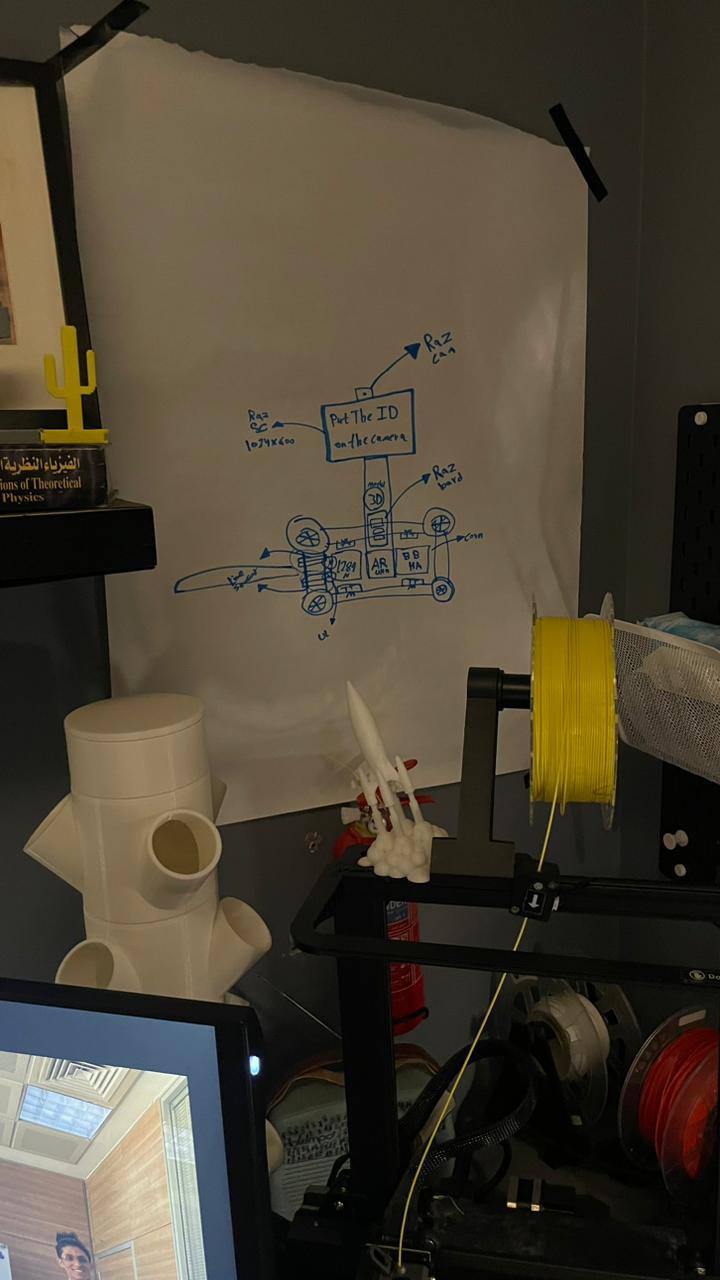
- Early concept design supported by physical prototyping and 3D printing.
Impact & Future Work
AMEN aims to reduce manual inspection effort, improve consistency in applying checkpoint procedures, support faster vehicle processing, provide dashboard-based statistics, and reduce direct exposure of officers to vehicle-side risks. Future development may include window tint detection, vehicle sound intensity analysis, seatbelt violation detection, and passenger limit detection.
- Reduce manual inspection effort.
- Improve consistency in checkpoint procedures.
- Support faster vehicle processing.
- Provide useful statistics through dashboard data.
- Reduce direct exposure of officers to vehicle-side risks.
- Future features: tint detection, vehicle sound analysis, seatbelt detection, and passenger limit detection.